Zenith is advancing a phased development platform designed to bring together water, renewable energy, digital infrastructure, and selected supporting real estate within one disciplined long-term strategy.
Zenith is being developed as a high-conviction platform for productive investment in Uruguay. The strategy is to align strategic land, resource relevance, infrastructure opportunity, and experienced execution into a single long-term development thesis.
A large-format development platform with long-term optionality, designed for multiple complementary value-creating pathways.
Water and infrastructure considerations are central to the site's long-term importance. The property is situated next to a beautiful lake, with a large freshwater aquifer system underneath it.
Renewable energy forms a foundational layer of the broader platform strategy, in a country that generated 99% of its electricity from renewables in 2024.
Canelones is increasingly relevant to modern infrastructure. Google invested $850M in a hyperscale data center here in 2024 — the closest region to Montevideo.
Zenith is designed for aligned investors, operators, and strategic partners seeking exposure to a stable jurisdiction and a differentiated development platform in South America.
Zenith is being shaped to support infrastructure, industrial, and technology-oriented uses in Canelones through a phased and partnership-led development approach.
Zenith is a long-horizon development platform intended to accommodate complementary uses across water-related infrastructure, renewable energy, digital infrastructure, and selected supporting development. The objective is to create a durable base for future operators and strategic partners while contributing to productive regional growth.
Zenith is being advanced as a platform rather than a fixed end state, allowing multiple value-creating pathways to be evaluated over time.
Water is one of the site's defining strategic considerations. The property is situated on a beautiful lakefront, with a large freshwater aquifer system underneath it — informing several potential long-term industrial and infrastructure use cases.
Energy is a foundational component of the Zenith strategy and an important lever for future site activation — in a country generating 99% of its electricity from renewables.
As Canelones gains importance in Uruguay's broader infrastructure ecosystem — anchored by Google's $850M data center — Zenith is positioned to evaluate technology-oriented use cases alongside other productive uses.
Zenith is being advanced through a phased development strategy designed to prioritize capital discipline, regulatory alignment, and long-term value creation. Each phase is designed to reduce risk, validate assumptions, and create optionality for the next stage.
The initial phase focuses on execution of the team's exclusive land purchase option, conducting comprehensive diligence, and establishing a clear, data-driven development roadmap. The objective is to ensure all subsequent development is grounded in verified data, realistic assumptions, and a clear execution pathway.
With foundational diligence complete, Zenith transitions into early-stage development. This phase emphasizes the selective implementation of infrastructure and the onboarding of aligned partners to begin operationalizing key components of the platform. The approach is intentionally measured, prioritizing high-quality execution and strategic alignment over speed.
Following successful initial activation, Zenith is positioned to scale development across selected verticals. Expansion is driven by validated demand, partner alignment, and regulatory clarity, ensuring that growth remains disciplined and economically sound. Zenith is designed to evolve as a flexible platform capable of supporting multiple complementary use cases over time.
Zenith's development approach is deliberately disciplined. The emphasis is on sequencing, responsible resource evaluation, partnership quality, and long-term alignment over speed for its own sake.
The Zenith thesis is based on durability: a stable jurisdiction, strategic regional positioning, infrastructure relevance, and a platform structure that can evolve as the market, partnerships, and development pathway mature.
Zenith works with a select group of aligned investors, operators, and strategic partners.
Zenith's team combines international perspective with on-the-ground Uruguayan experience, emphasizing execution relevance, governance maturity, and local fluency.
Zenith brings together leadership with experience across investment strategy, legal and regulatory structuring, local market execution, innovation ecosystems, and long-term project development.

David Luftglass is a strategic operator and founder with over a decade of experience building and scaling ventures across real estate, technology, and emerging industries. He is the founder of Acronym Investment and has launched 7 brands and over 70 products in the United States. Previously, David managed a cryptocurrency investment fund that outperformed bitcoin and ethereum in 4 of its five terms.
At Zenith, David leads overall strategy, capital formation, and partnership development. His role is focused on aligning international capital with high-quality opportunities in Uruguay, structuring the project for long-term value creation, and building the strategic relationships necessary to execute a multi-asset development platform.
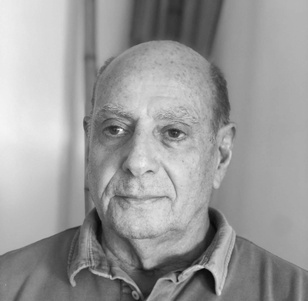
Santiago González Cravino is a highly accomplished leader with over two decades of experience across public and private sector development, international institutions, and economic strategy. He has held senior roles including Director of the Mercosur Secretariat and Director at the United Nations Industrial Development Organization (UNIDO), as well as Technical Coordinator for Inter-American Development Bank (IDB) programs.
A Member of the Academic Council of the Argentine Chancellery, the Foundation for Higher Business Studies, and the Teatro Colón Foundation, Santiago holds an MBA from Harvard University and has published extensively on regional economic integration and development. As Chairman of Zenith, Santiago provides senior strategic guidance, helping align the project with broader regional dynamics and long-term economic development objectives.

Rodrigo Rey is a legal and regulatory expert with extensive experience advising on compliance, corporate structuring, and public-private sector engagement across Uruguay and international jurisdictions. He holds a law degree from the University of the Republic, a Master's Degree in Regulatory Compliance from the University of La Mancha, and is a candidate for a Master of Laws from the University of Montevideo.
At Zenith, Rodrigo leads legal and regulatory strategy, ensuring that the project is structured in compliance with applicable frameworks while maintaining flexibility for long-term development. His expertise spans regulatory navigation, government relations, and cross-border legal considerations.

Enrique Topolansky is an experienced innovation leader and mentor, having served as Head of Innovation for Uruguay's largest university, ORT, for over 30 years. A graduate of the Stanford Technology Ventures Program and the MIT Professional Education program, Enrique has provided invaluable guidance to every Uruguayan unicorn to date — all three of the country's tech unicorns went through his incubator program in their early days.
He has mentored hundreds of Uruguayan startups, building an exceptional track record of identifying and cultivating high-potential ventures within Uruguay's entrepreneurial ecosystem.

Andrés Israel graduated from Dickinson College with a degree in International Relations and Economics, completed a program in Entrepreneurship at Hebrew University of Jerusalem, and holds executive certificates from both Stanford University Business School and Harvard Business School.
An Endeavor entrepreneur and recipient of Uruguay's 2018 National Innovation Award for his startup GuruCargo, Andrés is currently CEO of Pooshlo, a rapidly scaling influencer marketing platform based in Punta Del Este. At Zenith, he bridges international capital and local execution, drawing on deep relationships across Uruguay's private sector and innovation ecosystem.

Thomas Kossmann is a Uruguay-based real estate investor and advisor with deep expertise in land development, structuring, and execution of large-scale projects across the country. With decades of on-the-ground experience navigating local regulatory frameworks and complex land assets, Thomas plays a critical role in bridging international capital with Uruguayan opportunities.
He is also an active owner and director at the World Trade Center Complex in Uruguay — one of the country's most prominent tax-advantaged business environments. At Zenith, Thomas leads land strategy and development execution, supporting site optimization and the practical realization of the broader platform vision.
Uruguay combines institutional continuity, high-quality infrastructure, and an increasingly future-facing operating environment. For long-duration platforms, those fundamentals reduce execution risk and improve long-term planning certainty.
Uruguay's investment-grade sovereign profile is one of the clearest signals of institutional predictability in the Americas — a foundational consideration for long-duration infrastructure platforms.
Over 90% of Uruguay's population has broadband internet access — a connectivity baseline that meaningfully expands what is feasible for digital services, distributed work, and data-intensive operations. (U.S. government market intelligence)
Google's decision to invest $850 million in a hyperscale data center in Canelones is a high-visibility signal. Hyperscale projects require a credible combination of grid reliability, connectivity, and institutional predictability — all of which Uruguay has demonstrated.
Completion of Google's Firmina subsea cable linking Myrtle Beach, South Carolina to Punta del Este strengthens Uruguay's role in regional data flows — one concrete example of why Uruguay is becoming more strategically relevant to global digital infrastructure.
Uruguay's Plan Ceibal scaled nationwide beginning in 2007, connecting every educational institution and providing computers and connectivity to students and teachers across the public system. Within two years, every primary school student and teacher had a computer and wireless connectivity — an unusually fast nationwide deployment for a public program.
Over time, that baseline improves the depth of digitally fluent talent and strengthens the country's readiness for modern services and infrastructure — an important signal of national-scale execution capability.
Uruguay generated 99% of its electricity from renewable sources in 2024, with hydro, wind, and biomass as major contributors. Grid coverage reaches 99.8% of households with strong redundancy in the transmission network — positioning reliability as part of the national value proposition.
For infrastructure underwriting, this is not a "nice-to-have" — it is a core cost, reliability, and sustainability input, especially for energy-intensive and mission-critical operations.
Zenith works with a select group of aligned investors, operators, strategic partners, and institutional stakeholders.
For project information, partnership discussions, or diligence-related inquiries, please use the form. All inquiries are reviewed directly by the Zenith team.
A member of the team will be in touch shortly. All inquiries are reviewed directly by the Zenith team.